

" height="99px" id="GloZW7SBG" width="1200px"/></svg>)
The Architecture of Defiance
In 1933, the Paris police chief threatened to arrest Marlene Dietrich if she stepped off the train wearing trousers. She did it anyway, perfectly tailored and entirely unmoved. Society, it seems, has always been slightly terrified of a woman who is thoroughly comfortable in a suit.
When Dietrich claimed the tuxedo long before it reached the runway, she wasn’t attempting to blend in with men. She was doing something far more radical: she was rendering them secondary.
The power of this look doesn’t lie in hiding femininity, but in framing it with armour. A man in a dinner jacket is standard; a woman in a precisely cut tuxedo is a provocation. It takes the familiar, rigid geometry of traditional tailoring and sharpens the edges. It is a look that requires an immaculate shoulder, a quiet nerve, and a healthy dose of wry detachment. True subversion, after all, doesn’t need to shout. It simply refuses to ask for permission, looks exceptionally sharp, and leaves the room entirely on its own terms.
THE CODIFIED REBELLION
What Dietrich did as a brilliant, solo performance on a train platform in 1933, Yves Saint Laurent eventually turned into a permanent shift in the wardrobe. In 1966, he introduced Le Smoking, and in doing so, he realised something crucial: women didn’t just need more options; they needed authority.
He didn’t try to make women look like men. Instead, he took the hyper-traditional, rigid geometry of a man’s evening tuxedo, adjusted the proportions, and let the tailoring do the talking. It was a beautiful sort of mutiny because it was so entirely elegant.
A woman in a sharp tuxedo wasn’t trying to slip into a gentleman’s club unnoticed. She was rendering the whole concept of the club slightly obsolete. It proved that clothing could be intensely intimate and alluring precisely because it was so crisp and severe.
THE MODERN GEOMETRY
In a world dominated by disposable, unstructured clothes that don’t demand much from us, choosing structure feels like its own quiet rebellion. Precision tailoring requires a certain kind of nerve. It changes how you carry your shoulders, how you walk into a room, how you claim your own space.
True elegance has never been about playing it safe. It has always carried an edge. A beautiful, deliberate refusal to comply.
She wasn’t borrowing from the masculine wardrobe. She was taking it back.
THE DIETRICH FAMILY
Three pieces in this collection carry her name. Not as tribute, exactly. More as acknowledgement.
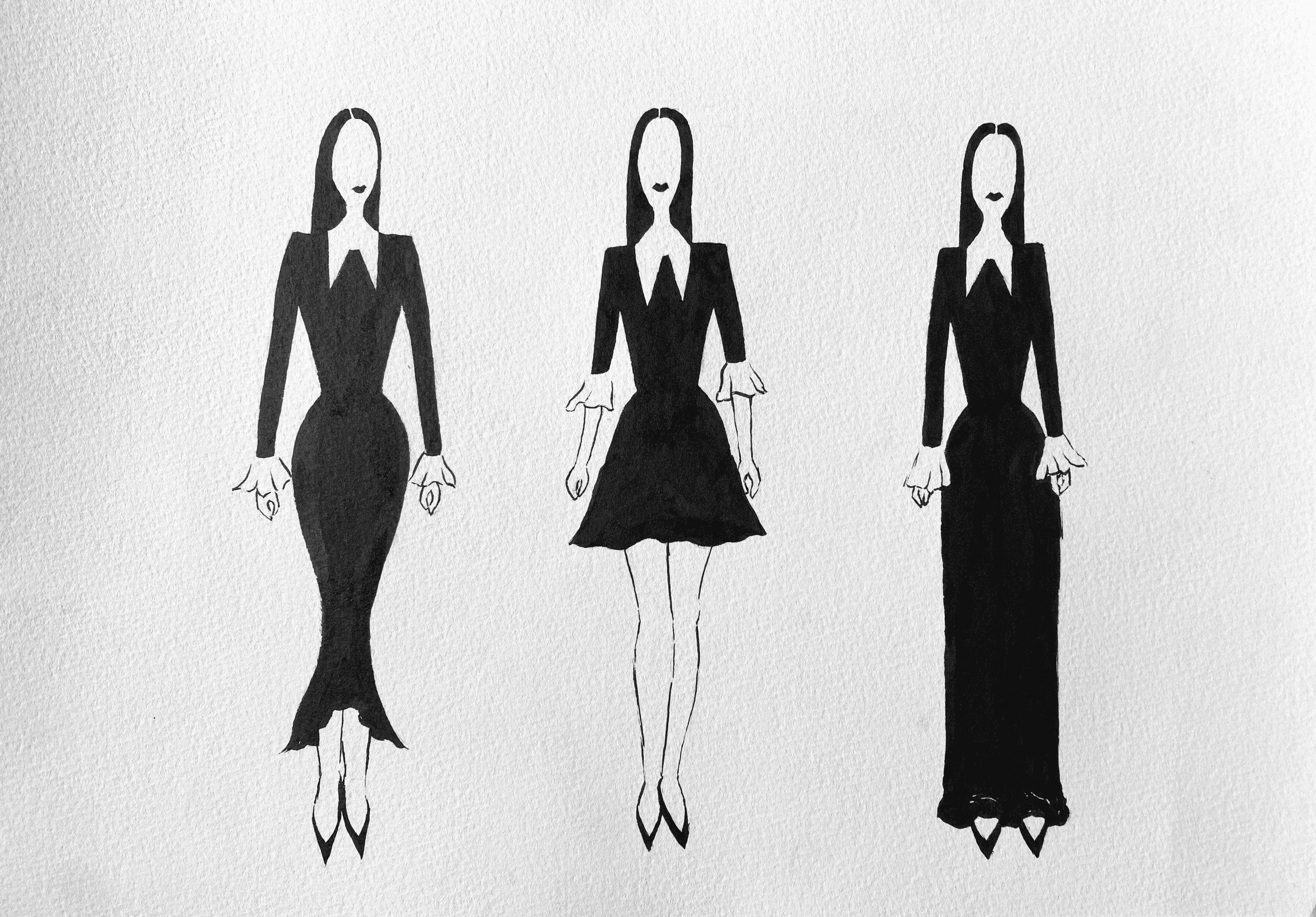
THE DIETRICH | Built on the same contradiction she understood instinctively: severity at the shoulder, sensuality below. Cut from deep black velvet, fully lined, the bodice is architectural and the skirt gathers into a sweeping asymmetric fishtail. There is a concealed drawstring if you want it. The dress works either way. So did she. |
THE LITTLE DIETRICH | The short version. Deep black velvet, ivory satin collar, ruffled cuffs, a drop-waist circular skirt. Part of the same family. No less serious. |
THE DIETRICH JUMPSUIT | Where the argument completes itself. Wide-leg flare, sculpted shoulders, ivory satin collar and bell cuffs breaking from the velvet at the wrist. Structured enough to command. Dramatic enough to linger. |
Naming them was deliberate. A line drawn between what she claimed then, on a train platform in 1933 with the Paris police watching, and what these clothes are asking of the women who wear them now.
The architecture of defiance doesn’t change. Only the silhouette.
The Dietrich Dress
The Little Dietrich
The Dietrich Jumpsuit


The Architecture of Defiance
In 1933, the Paris police chief threatened to arrest Marlene Dietrich if she stepped off the train wearing trousers. She did it anyway, perfectly tailored and entirely unmoved. Society, it seems, has always been slightly terrified of a woman who is thoroughly comfortable in a suit.
When Dietrich claimed the tuxedo long before it reached the runway, she wasn’t attempting to blend in with men. She was doing something far more radical: she was rendering them secondary.
The power of this look doesn’t lie in hiding femininity, but in framing it with armour. A man in a dinner jacket is standard; a woman in a precisely cut tuxedo is a provocation. It takes the familiar, rigid geometry of traditional tailoring and sharpens the edges. It is a look that requires an immaculate shoulder, a quiet nerve, and a healthy dose of wry detachment. True subversion, after all, doesn’t need to shout. It simply refuses to ask for permission, looks exceptionally sharp, and leaves the room entirely on its own terms.
THE CODIFIED REBELLION
What Dietrich did as a brilliant, solo performance on a train platform in 1933, Yves Saint Laurent eventually turned into a permanent shift in the wardrobe. In 1966, he introduced Le Smoking, and in doing so, he realised something crucial: women didn’t just need more options; they needed authority.
He didn’t try to make women look like men. Instead, he took the hyper-traditional, rigid geometry of a man’s evening tuxedo, adjusted the proportions, and let the tailoring do the talking. It was a beautiful sort of mutiny because it was so entirely elegant.
A woman in a sharp tuxedo wasn’t trying to slip into a gentleman’s club unnoticed. She was rendering the whole concept of the club slightly obsolete. It proved that clothing could be intensely intimate and alluring precisely because it was so crisp and severe.
THE MODERN GEOMETRY
In a world dominated by disposable, unstructured clothes that don’t demand much from us, choosing structure feels like its own quiet rebellion. Precision tailoring requires a certain kind of nerve. It changes how you carry your shoulders, how you walk into a room, how you claim your own space.
True elegance has never been about playing it safe. It has always carried an edge. A beautiful, deliberate refusal to comply.
She wasn’t borrowing from the masculine wardrobe. She was taking it back.
THE DIETRICH FAMILY
Three pieces in this collection carry her name. Not as tribute, exactly. More as acknowledgement.
THE DIETRICH | Built on the same contradiction she understood instinctively: severity at the shoulder, sensuality below. Cut from deep black velvet, fully lined, the bodice is architectural and the skirt gathers into a sweeping asymmetric fishtail. There is a concealed drawstring if you want it. The dress works either way. So did she. |
THE LITTLE DIETRICH | The short version. Deep black velvet, ivory satin collar, ruffled cuffs, a drop-waist circular skirt. Part of the same family. No less serious. |
THE DIETRICH JUMPSUIT | Where the argument completes itself. Wide-leg flare, sculpted shoulders, ivory satin collar and bell cuffs breaking from the velvet at the wrist. Structured enough to command. Dramatic enough to linger. |
Naming them was deliberate. A line drawn between what she claimed then, on a train platform in 1933 with the Paris police watching, and what these clothes are asking of the women who wear them now.
The architecture of defiance doesn’t change. Only the silhouette.
The Dietrich Dress
The Little Dietrich
The Dietrich Jumpsuit
Collection 01.
Our Story
Home
Copyright State of Dress 2026
The Language of Dress
Guest List
Contact

COLLECTION 01.
OUR STORY
HOME
Copyright State of Dress 2026
THE LANGUAGE OF DRESS
Copyright State of Dress 2026
GUEST LIST
CONTACT
COLLECTION 01.
OUR STORY
HOME
Copyright State of Dress 2026
THE LANGUAGE OF DRESS
Copyright State of Dress 2026
GUEST LIST
CONTACT
COLLECTION 01.
OUR STORY
HOME
Copyright State of Dress 2026
GUEST LIST
CONTACT
THE LANGUAGE OF DRESS
Copyright State of Dress 2026