'Difficult Women': The Rules of Engagement
'Difficult Women': The Rules of Engagement

Most of us spend our lives wearing a kind of social camouflage. We subconsciously pick clothes that apologise in advance, cut to ensure we move through a room without causing a scene.
And then a woman walks in wearing something that feels like a loud, deliberate bang on a dinner table.
It isn't about being pretty, or even particularly stylish in the way magazines mean it. It's that her outline refuses to cooperate with the room. The proportions are deliberately wrong, anchored by boots too heavy for the occasion. She hasn't dressed to be approved of. She's dressed to occupy space.
You can watch people process it in real time. A pause in the conversation. A stiffness in everyone's shoulders. By the next morning, someone has used the word difficult.
"Difficult" is just the word people reach for when a woman creates a draft in a warm room. Strip away the lazy vocabulary and it isn't a flaw of character. It's a refusal to obey in advance.
Courtney Love: The Threat in the Slip Dress
Throughout the 90s, the music press treated Courtney Love less like a frontwoman and more like a public hazard. Strip away the hysteria and her real offence was simple: she failed to be a respectable rock wife, and she dressed the part.
When Kurt Cobain died in April 1994, nobody in their right mind expected her to sit quietly behind dark glasses and suffer in private. What the music press really wanted was a modern Yoko Ono: a convenient villain to blame, someone to take the fall so they could mint a tortured genius in peace.
Instead, two days after his body was found, a tape of her voice played over the loudspeakers to thousands of shell-shocked mourners gathered at Seattle Center. She didn't deliver a eulogy. She read from his suicide note, broke off mid-line to call him "such an asshole," and told the crowd to scream it back at him. Thousands did. She forced a stadium of grieving strangers to listen to her argue with a dead man in real time.
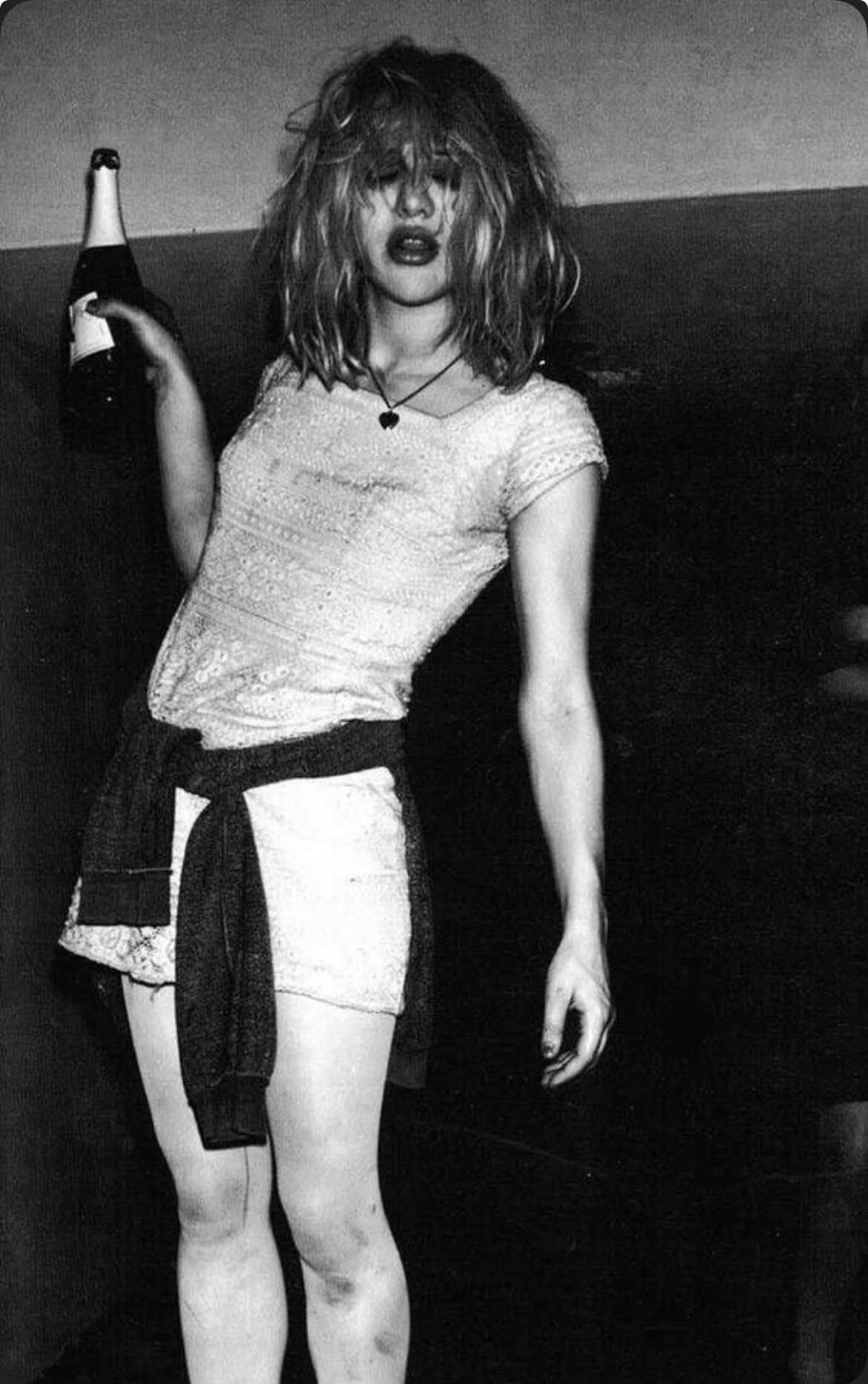
Her wardrobe was part of that same refusal. The kinderwhore look wasn't an aesthetic dreamed up for a photoshoot. It was what happens when you pull a 1930s silk slip over laddered tights and let dark lipstick bleed past the lip line until the whole thing turns into body armour.
In performance, that armour took a beating: by the second song the lace was torn at the armpits, the hem shredding under the heel of a boot built for a different fight. Live Through This was a brilliant record. Naturally, critics spent half their review space on her manners, because they'd wanted a stoic, grieving widow and got a woman bleeding out in public instead.
Twelve years later, across the Atlantic, the fabric shifted from shredded silk to stiff tulle, but the threat of a woman refusing to perform reverence remained unchanged.
Lily Allen: The Saboteur in a Prom Dress
Lily Allen caught the British music establishment off guard in 2006 because she looked like any other girl sitting on a curb in Camden eating chips at three in the morning. While record executives were still working out how the internet functioned, she used Myspace to bypass every gatekeeper in London and build a direct line to an audience no A&R department had ever thought to court, women who recognised their own chaotic lives in her songs about class and useless boyfriends.

Her wardrobe did its own quiet vandalism. Stiff, sugar-pink prom dresses anchored with scuffed Air Maxes straight off a pub carpet. Paired with a deadpan London delivery, it made her impossible to patronise. The press wanted a grateful pop princess. When she gave them none, they settled for mouthy.
Two decades on, after years of tabloid coverage that treated her miscarriages and divorces as the same kind of story, breaking news rather than grief, the tabloids expected the standard script when her second marriage collapsed: a quiet statement, a polite retreat from view. Instead, she went into a studio and wrote West End Girl in ten days, laying out the wreckage herself before anyone else could. As always, she refused to let someone else write the final draft.
Diana Vreeland: The Authority in Crimson
If Lily Allen represents the messy, pub-carpet realism of a woman weaponising her own chaos on the streets of London, Diana Vreeland operated at the absolute opposite end of the spectrum. She didn't bother with the real world at all. She simply built a grander, vastly more expensive theatrical universe and expected everyone else to live in it.
Imagine your mother spends your entire childhood telling you that you are hopelessly, irredeemably ugly while your sister is a vision of radiant perfection. For most people, the trajectory from there involves a lifetime of quiet therapy and apologising for their own face. Diana Vreeland bypassed that brutal maternal verdict entirely. Standard American pretty was far too dull a target to aspire to; a lazy reliance on symmetrical features to do all the heavy lifting of lacking a personality. Nope, she built a career out of terrifying anyone who dared to look ordinary. There was no way she was about to fit into their world. If she couldn't be the classic swan, she was going to become a lacquered, terrifying raven instead, deploying an aggressive elegance that made every symmetrical woman in Manhattan look as exciting as woodchip wallpaper.
To understand Vreeland as a Brit, you have to picture a woman who treated basic reality as a minor admin error she was personally born to correct. Long before she ran American Vogue like her own personal fiefdom in the 60s, she wrote an advice column for Harper's Bazaar called "Why Don't You...?" which reads less like lifestyle tips and more like the unhinged decrees of an aristocrat who'd never seen a utility bill in her life. She'd casually ask her readers why they didn't wash their toddlers' hair in flat champagne, or have the heels of their shoes lined in pink velvet. Utterly out of reach for ninety-nine percent of the human race, these demands were delivered with the terrifying confidence of someone who'd never once been crossed by an adult.
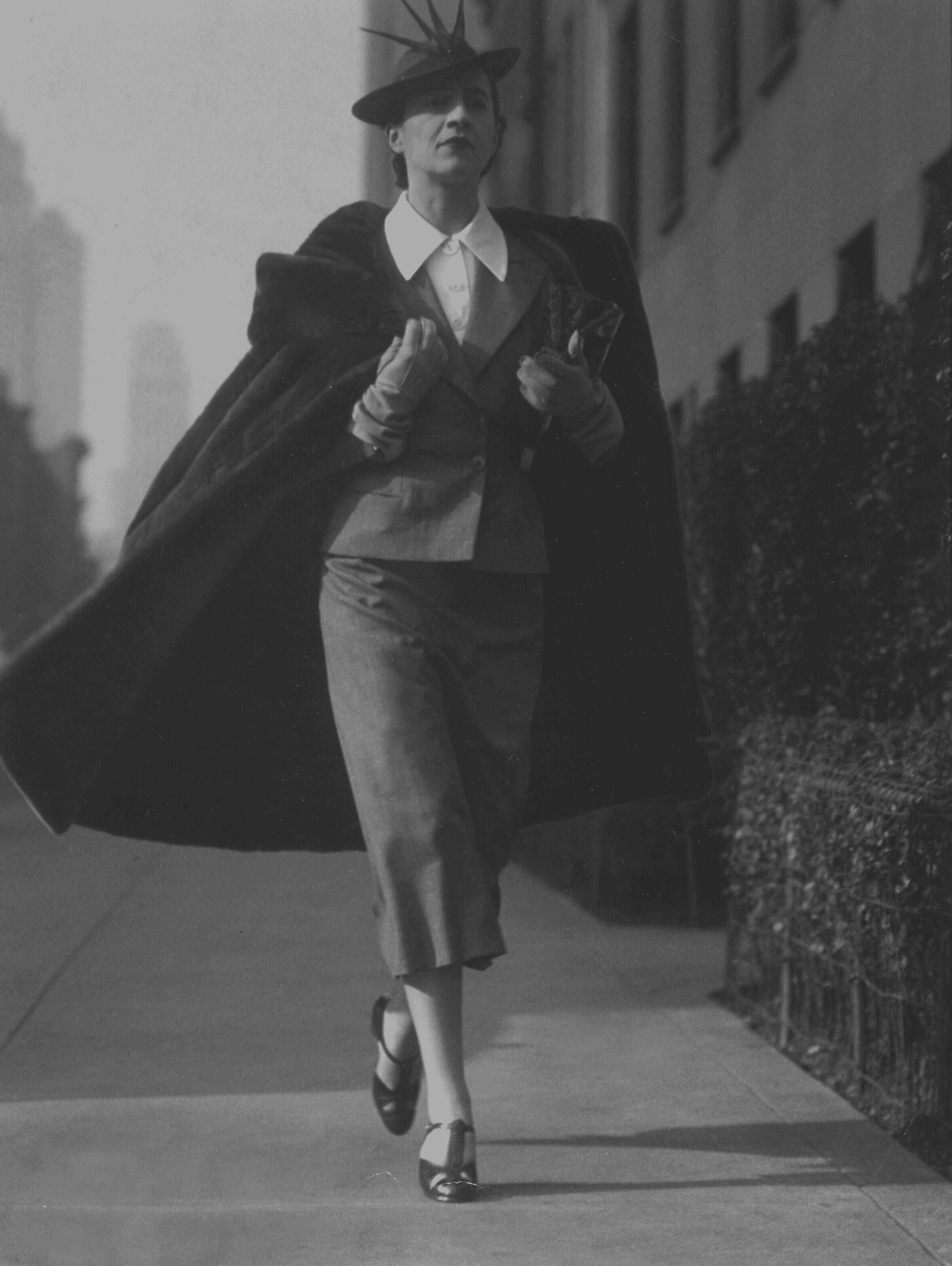
Her own body was her primary piece of theatre. She pulled her jet-black hair back so tight against her skull it looked like enamel. Rouge was slapped onto her cheekbones with the violence of a theatre curtain going up, while her wrists were loaded with bangles heavy enough to cause a repetitive strain injury. When she decided her New York apartment lacked atmosphere, she could've bought a nice sofa. Instead, she ordered her decorator to drench every wall, curtain, and chair in a blinding, feverish red, insisting she wanted the place to look like "the garden of hell."
Naturally, the industry called her impossible. What they meant was that she treated the entire magazine apparatus as a playground rather than a business. She would summon staff at eight in the morning to demand a shade of yellow that only existed behind her own eyelids, then dispatch entire photography crews across continents on a whim. To Richard Avedon, this was pure genius; to the accountants, it was financial terrorism. In 1971, terrified by a woman in her late sixties who treated their bottom line like confetti, they sacked her.
Most women staring down their late sixties, discarded and publicly humiliated by their employers, would have slunk off into a quiet, bruised retirement. Vreeland treated her firing like a stupid clerical error made by boring men. She marched straight into the Metropolitan Museum of Art and hijacked their sleepy Costume Institute, inventing the modern Met Gala out of pure, unadulterated spite. If Condé Nast didn't want her circus, she'd simply build a bigger one uptown and force them to buy tickets.
Her survival didn't rely on being gentle or relatable; she proved that "pretty" is about the most boring thing a woman can possibly be. She took a childhood insult meant to crush her and weaponised it into total cultural authority. When the system tried to drop her, she simply painted the next room crimson and kept ruling.
The Real Cost
Too much, too honest, and far too inconvenient. Different eras, totally different wardrobes, one identical verdict.
The common thread isn't that these women were misunderstood. They were understood perfectly well, which is precisely why the culture tried to slap them down. They refused to fit into any of the tame silhouettes carved out for them, and the world tries to punish a woman for looking wrong before it ever bothers to listen to what she has to say.
Calling a woman "difficult" saves everyone the trouble of asking the real question: why does a woman taking up space on her own terms look, to most people, like someone behaving badly?
It costs something to be visually inconvenient. People will pick apart the cut of your clothes long before they ever take you seriously. But the alternative is wearing social camouflage for eighty years, disappearing into the background and pretending you were never really there in the first place.
'Difficult Women': The Rules of Engagement
Most of us spend our lives wearing a kind of social camouflage. We subconsciously pick clothes that apologise in advance, cut to ensure we move through a room without causing a scene.
And then a woman walks in wearing something that feels like a loud, deliberate bang on a dinner table.
It isn't about being pretty, or even particularly stylish in the way magazines mean it. It's that her outline refuses to cooperate with the room. The proportions are deliberately wrong, anchored by boots too heavy for the occasion. She hasn't dressed to be approved of. She's dressed to occupy space.
You can watch people process it in real time. A pause in the conversation. A stiffness in everyone's shoulders. By the next morning, someone has used the word difficult.
"Difficult" is just the word people reach for when a woman creates a draft in a warm room. Strip away the lazy vocabulary and it isn't a flaw of character. It's a refusal to obey in advance.
Courtney Love: The Threat in the Slip Dress
Throughout the 90s, the music press treated Courtney Love less like a frontwoman and more like a public hazard. Strip away the hysteria and her real offence was simple: she failed to be a respectable rock wife, and she dressed the part.
When Kurt Cobain died in April 1994, nobody in their right mind expected her to sit quietly behind dark glasses and suffer in private. What the music press really wanted was a modern Yoko Ono: a convenient villain to blame, someone to take the fall so they could mint a tortured genius in peace.
Instead, two days after his body was found, a tape of her voice played over the loudspeakers to thousands of shell-shocked mourners gathered at Seattle Center. She didn't deliver a eulogy. She read from his suicide note, broke off mid-line to call him "such an asshole," and told the crowd to scream it back at him. Thousands did. She forced a stadium of grieving strangers to listen to her argue with a dead man in real time.
Her wardrobe was part of that same refusal. The kinderwhore look wasn't an aesthetic dreamed up for a photoshoot. It was what happens when you pull a 1930s silk slip over laddered tights and let dark lipstick bleed past the lip line until the whole thing turns into body armour.
In performance, that armour took a beating: by the second song the lace was torn at the armpits, the hem shredding under the heel of a boot built for a different fight. Live Through This was a brilliant record. Naturally, critics spent half their review space on her manners, because they'd wanted a stoic, grieving widow and got a woman bleeding out in public instead.
Twelve years later, across the Atlantic, the fabric shifted from shredded silk to stiff tulle, but the threat of a woman refusing to perform reverence remained unchanged.
Lily Allen: The Saboteur in a Prom Dress
Lily Allen caught the British music establishment off guard in 2006 because she looked like any other girl sitting on a curb in Camden eating chips at three in the morning. While record executives were still working out how the internet functioned, she used Myspace to bypass every gatekeeper in London and build a direct line to an audience no A&R department had ever thought to court, women who recognised their own chaotic lives in her songs about class and useless boyfriends.
Her wardrobe did its own quiet vandalism. Stiff, sugar-pink prom dresses anchored with scuffed Air Maxes straight off a pub carpet. Paired with a deadpan London delivery, it made her impossible to patronise. The press wanted a grateful pop princess. When she gave them none, they settled for mouthy.
Two decades on, after years of tabloid coverage that treated her miscarriages and divorces as the same kind of story, breaking news rather than grief, the tabloids expected the standard script when her second marriage collapsed: a quiet statement, a polite retreat from view. Instead, she went into a studio and wrote West End Girl in ten days, laying out the wreckage herself before anyone else could. As always, she refused to let someone else write the final draft.
Diana Vreeland: The Authority in Crimson
If Lily Allen represents the messy, pub-carpet realism of a woman weaponising her own chaos on the streets of London, Diana Vreeland operated at the absolute opposite end of the spectrum. She didn't bother with the real world at all. She simply built a grander, vastly more expensive theatrical universe and expected everyone else to live in it.
Imagine your mother spends your entire childhood telling you that you are hopelessly, irredeemably ugly while your sister is a vision of radiant perfection. For most people, the trajectory from there involves a lifetime of quiet therapy and apologising for their own face. Diana Vreeland bypassed that brutal maternal verdict entirely. Standard American pretty was far too dull a target to aspire to; a lazy reliance on symmetrical features to do all the heavy lifting of lacking a personality. Nope, she built a career out of terrifying anyone who dared to look ordinary. There was no way she was about to fit into their world. If she couldn't be the classic swan, she was going to become a lacquered, terrifying raven instead, deploying an aggressive elegance that made every symmetrical woman in Manhattan look as exciting as woodchip wallpaper.
To understand Vreeland as a Brit, you have to picture a woman who treated basic reality as a minor admin error she was personally born to correct. Long before she ran American Vogue like her own personal fiefdom in the 60s, she wrote an advice column for Harper's Bazaar called "Why Don't You...?" which reads less like lifestyle tips and more like the unhinged decrees of an aristocrat who'd never seen a utility bill in her life. She'd casually ask her readers why they didn't wash their toddlers' hair in flat champagne, or have the heels of their shoes lined in pink velvet. Utterly out of reach for ninety-nine percent of the human race, these demands were delivered with the terrifying confidence of someone who'd never once been crossed by an adult.
Her own body was her primary piece of theatre. She pulled her jet-black hair back so tight against her skull it looked like enamel. Rouge was slapped onto her cheekbones with the violence of a theatre curtain going up, while her wrists were loaded with bangles heavy enough to cause a repetitive strain injury. When she decided her New York apartment lacked atmosphere, she could've bought a nice sofa. Instead, she ordered her decorator to drench every wall, curtain, and chair in a blinding, feverish red, insisting she wanted the place to look like "the garden of hell."
Naturally, the industry called her impossible. What they meant was that she treated the entire magazine apparatus as a playground rather than a business. She would summon staff at eight in the morning to demand a shade of yellow that only existed behind her own eyelids, then dispatch entire photography crews across continents on a whim. To Richard Avedon, this was pure genius; to the accountants, it was financial terrorism. In 1971, terrified by a woman in her late sixties who treated their bottom line like confetti, they sacked her.
Most women staring down their late sixties, discarded and publicly humiliated by their employers, would have slunk off into a quiet, bruised retirement. Vreeland treated her firing like a stupid clerical error made by boring men. She marched straight into the Metropolitan Museum of Art and hijacked their sleepy Costume Institute, inventing the modern Met Gala out of pure, unadulterated spite. If Condé Nast didn't want her circus, she'd simply build a bigger one uptown and force them to buy tickets.
Her survival didn't rely on being gentle or relatable; she proved that "pretty" is about the most boring thing a woman can possibly be. She took a childhood insult meant to crush her and weaponised it into total cultural authority. When the system tried to drop her, she simply painted the next room crimson and kept ruling.
The Real Cost
Too much, too honest, and far too inconvenient. Different eras, totally different wardrobes, one identical verdict.
The common thread isn't that these women were misunderstood. They were understood perfectly well, which is precisely why the culture tried to slap them down. They refused to fit into any of the tame silhouettes carved out for them, and the world tries to punish a woman for looking wrong before it ever bothers to listen to what she has to say.
Calling a woman "difficult" saves everyone the trouble of asking the real question: why does a woman taking up space on her own terms look, to most people, like someone behaving badly?
It costs something to be visually inconvenient. People will pick apart the cut of your clothes long before they ever take you seriously. But the alternative is wearing social camouflage for eighty years, disappearing into the background and pretending you were never really there in the first place.
COLLECTION 01.
OUR STORY
HOME
Copyright State of Dress 2026
THE LANGUAGE OF DRESS
Copyright State of Dress 2026
GUEST LIST
CONTACT